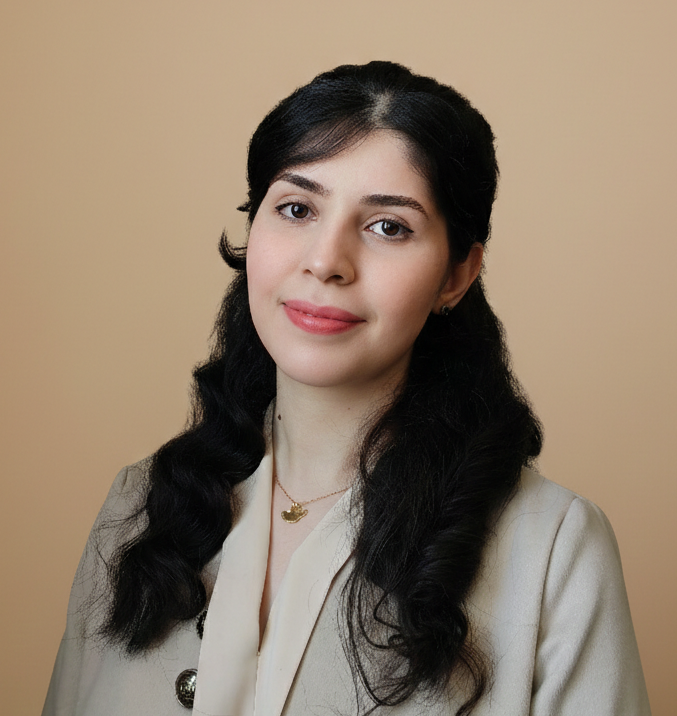
About Me
I am a graduate research assistant at Isfahan University of Technology (IUT) with extensive experience in designing and developing AI frameworks for healthcare applications. My passion lies in creating advanced AI tools to assist patients and healthcare professionals, ultimately enhancing quality of life. Through my work, I aim to improve clinical outcomes, detect and prevent diseases, and mitigate harmful health habits.
I thrive on conducting research and developing innovative solutions by leveraging machine learning, deep learning, and signal and image processing techniques. To stay at the forefront of this rapidly evolving field, I am dedicated to continuously expanding my knowledge and expertise in AI. My ultimate goal is to bridge the gap between cutting-edge technology and practical healthcare solutions, fostering impactful advancements in the medical field.
Education
-
M.S., Computer Engineering, Artificial Intelligence Isfahan University of Technology (Aug 2023) GPA: 4.00/4.00 -
B.S., Electrical Engineering, Telecommunication University of Isfahan (Jun 2019)
Research Interests
1. AI in Healthcare
- My research focuses on leveraging AI and machine learning, particularly deep learning and neural networks, to detect both physical and mental health conditions early. The goal is to prevent diseases before they arise, halt their progression, and reduce complications for patients who are already affected.
2. Biomedical Signal and Image Processing
- Working with signals (e.g., ECG, EEG) and medical images (e.g., MRI, CT) to extract features and develop ML models for real-time monitoring, diagnosis, and deeper understanding of medical conditions.
3. Interpretable & Trustworthy AI:
- Designing methods that make AI decision-making clear and reliable so that clinicians and patients can use them with confidence.
4. Large Language Models (LLMs) & Multi-modal Learning
- Experienced in dataset creation (collection, annotation, and curation) and fine-tuning pretrained LLMs for NLP tasks such as sentiment analysis. Interested in extending
this expertise to multi-modal medical applications by integrating text, images, and signals for deeper understanding of complex conditions.
Technical Skills
- Programming: Python, MATLAB, C/C++
- Machine Learning & AI: PyTorch, TensorFlow, PyTorch, Scikit-learn, Keras
- Data Analysis & Visualization: NumPy, Pandas, Matplotlib, Seaborn, SKLearn